Article: When Can You Change a Conch Piercing? The Complete UK Guide (2026)
When Can You Change a Conch Piercing? The Complete UK Guide (2026)
Quick Answer
Most professional piercers recommend waiting at least 6 months before changing a conch piercing yourself. Although the piercing may feel comfortable after 8–12 weeks, the internal tissue usually takes much longer to heal completely. Changing jewellery too early can cause irritation, swelling, delayed healing and piercing bumps.
If you are unsure whether your piercing is fully healed, it is always safer to wait longer or ask an experienced piercer to perform the first jewellery change.
How Long Should You Wait Before Changing a Conch Piercing?
A conch piercing passes through thick ear cartilage, which naturally heals much more slowly than a standard earlobe piercing.
While the outside may appear healed within a few months, the inside of the piercing channel continues rebuilding for many more weeks.
A general timeline looks like this:
| Time | Can You Change Jewellery? |
|---|---|
| 0–8 weeks | ❌ No |
| 2–4 months | ❌ Only if medically necessary and performed by a professional |
| Around 6 months | ✅ Usually safe if healing has progressed normally |
| 6–12 months | ✅ Most people can comfortably change jewellery |
Healing times vary depending on your body, aftercare routine, sleeping habits and the jewellery material used during healing.

Why You Shouldn't Change a Conch Piercing Too Early
Many people assume that because the pain has disappeared, the piercing has healed.
Unfortunately, this is one of the most common mistakes.
Cartilage tissue heals from the inside out. Even if there is:
- no redness
- no swelling
- no pain
the piercing tunnel may still be fragile.
Removing jewellery too early can:
- reopen the healing channel
- introduce bacteria
- create irritation bumps
- restart the healing process
- make reinserting jewellery difficult
In some cases, a piercing that was healing perfectly can become irritated simply because jewellery was changed a few weeks too soon.
Signs Your Conch Piercing Is Ready for Its First Jewellery Change
Rather than relying only on time, look for several signs of complete healing.
A healthy conch piercing should have:
✅ no tenderness when touched
✅ no swelling
✅ no crusting for several weeks
✅ no discharge
✅ jewellery that moves comfortably without pain
✅ healthy surrounding skin with no redness
If even one of these signs is missing, waiting a few more weeks is usually the safest decision.
Healing slightly longer is almost always better than changing jewellery too early.
Can You Change a Conch Piercing After 6 Weeks?
In almost every case, no.
At six weeks, the piercing is still in the early healing stage.
Although swelling may have settled, the internal tissue remains delicate.
Changing jewellery this early often leads to:
- prolonged healing
- irritation
- pressure bumps
- renewed swelling
- soreness lasting several weeks
The only exception would be if your piercer needs to replace jewellery because of excessive swelling, incorrect sizing or another medical concern.
Never remove your jewellery simply because it "looks healed."
What Happens If You Change It Too Soon?
Changing jewellery before the piercing is fully healed can create several problems.
The jewellery removal process may:
- tear newly formed tissue
- introduce bacteria into the piercing
- trigger inflammation
- increase healing time
- make jewellery difficult to reinsert
Many irritation bumps appear shortly after an early jewellery change rather than from poor cleaning.
If swelling returns after changing jewellery, switching back to your original implant-grade titanium jewellery and following your aftercare routine usually helps calm the piercing.
What Jewellery Should You Choose After Healing?
Once your conch piercing has fully healed, you can start experimenting with different jewellery styles. However, comfort and material quality remain just as important as appearance.
Most professional piercers recommend beginning with a high-quality implant-grade titanium stud before switching to decorative jewellery.
Titanium offers several advantages:
- Lightweight and comfortable for everyday wear
- Nickel-free, making it suitable for sensitive skin
- Resistant to corrosion and tarnishing
- Less likely to cause irritation or allergic reactions
Even after your piercing has healed, low-quality jewellery can still trigger discomfort or inflammation. Investing in well-made jewellery helps maintain a healthy piercing over the long term.
Stud or Hoop: Which Is Better?
One of the most common questions is whether a hoop or a stud is better after healing.
The answer depends on how long your piercing has been healed.
Stud
A flatback stud is generally the safest option because it:
- Applies less pressure to the piercing channel
- Moves less during daily activities
- Is more comfortable for sleeping
- Reduces the risk of irritation
Hoop
Hoops can create a stylish appearance, but they also introduce more movement.
Changing to a hoop too early may result in:
- tenderness
- swelling
- irritation bumps
- prolonged healing
Many professional piercers suggest waiting several weeks after complete healing before wearing a ring regularly.
If you choose a hoop, ensure the diameter is large enough to avoid unnecessary pressure on the cartilage.

Titanium or Surgical Steel?
Many jewellery websites describe surgical steel as hypoallergenic, but not all surgical steel is completely nickel-free.
For people with sensitive skin, implant-grade titanium remains the safest option.
Implant-Grade Titanium
✔ Nickel-free
✔ Lightweight
✔ Excellent biocompatibility
✔ Recommended by many professional piercers
Surgical Steel
✔ Strong
✔ Affordable
✖ May contain trace amounts of nickel
✖ Not ideal for everyone with metal sensitivities
If you're unsure which material to choose, titanium is generally considered the safest long-term investment.
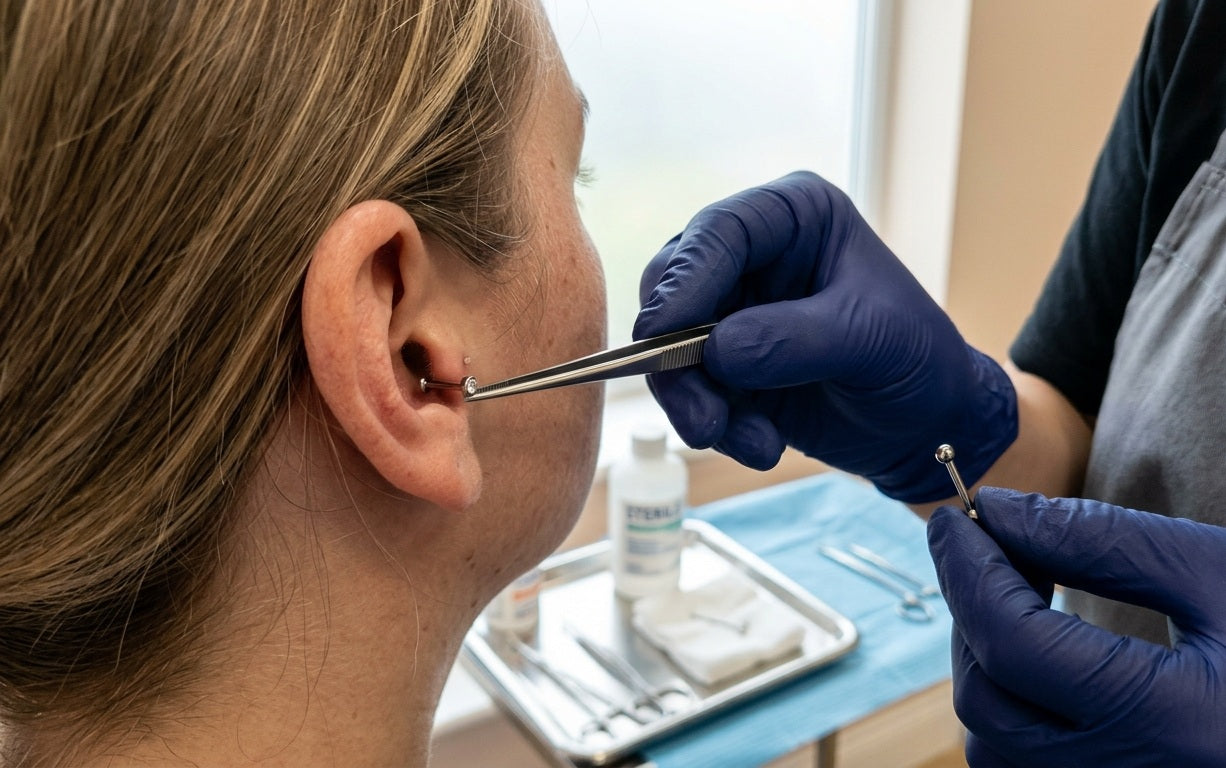
Should Your First Jewellery Change Be Done by a Piercer?
For many people, yes.
Your first jewellery change can be surprisingly difficult because cartilage piercings often feel healed before they actually are.
A professional piercer can:
- assess whether the piercing has healed properly
- minimise trauma during the jewellery change
- fit the correct jewellery size
- identify early signs of irritation
- answer any questions about long-term care
If you feel resistance while attempting to remove your jewellery yourself, stop immediately rather than forcing it.
How to Change a Conch Piercing Safely
If your piercing has fully healed and you feel confident changing it yourself, follow these steps carefully.
Step 1
Wash your hands thoroughly with soap and warm water.
Step 2
Clean the jewellery before inserting it.
Sterile saline or an appropriate jewellery disinfectant can help reduce contamination.
Step 3
Work in a well-lit room using a mirror.
Many people find it easier to use two mirrors when inserting jewellery into cartilage piercings.
Step 4
Remove the existing jewellery slowly.
Never twist aggressively or force it through the piercing.
Step 5
Insert the new jewellery gently.
If it doesn't slide in smoothly, stop rather than pushing it.
Step 6
Check that all threaded ends or clickers are securely fastened.
Loose jewellery can fall out during the first few days.
Common Mistakes When Changing a Conch Piercing
Many irritation problems are caused not by the piercing itself but by poor jewellery-changing habits.
Avoid these common mistakes:
❌ Changing jewellery after only a few weeks
❌ Wearing cheap plated jewellery
❌ Using jewellery that is too tight
❌ Forcing jewellery through resistance
❌ Changing jewellery with dirty hands
❌ Sleeping on the newly changed piercing during the first few nights
Giving your piercing time to settle after each jewellery change can help prevent unnecessary irritation.
Can You Change Your Conch Piercing Yourself?
Yes—but only if it has healed completely.
Before attempting your first jewellery change, ask yourself these questions:
- Has it been at least six months?
- Has there been no swelling for several weeks?
- Does the jewellery move comfortably?
- Is there no pain when touching the area?
- Are you using high-quality implant-grade jewellery?
If the answer to any of these questions is "no", waiting a little longer is usually the better option.
Remember, there is no benefit to rushing the process. A fully healed piercing gives you far more freedom to enjoy different jewellery styles without complications.
Frequently Asked Questions
Can I Change My Conch Piercing After 3 Months?
In most cases, no.
Although your piercing may look healed on the outside, cartilage continues healing beneath the surface for several more months. Changing jewellery after only three months increases the risk of irritation, swelling and delayed healing.
If your piercer recommends a jewellery change due to excessive swelling or an incorrectly sized post, this should be carried out professionally.
Can I Wear a Hoop Straight Away?
It is generally not recommended.
Hoops move more than studs and place additional pressure on the healing piercing channel. This movement can delay healing and increase the risk of irritation bumps.
For most people, it's best to wait until the piercing has fully healed before switching to a hoop.
If you prefer the look of a ring, start with a lightweight implant-grade titanium hoop in the correct diameter.
What Happens If My Piercing Bleeds During a Jewellery Change?
A small amount of bleeding may occur if the piercing is irritated.
If bleeding happens:
- wash your hands before touching the piercing
- gently clean the area with sterile saline
- avoid twisting or rotating the jewellery
- monitor for swelling over the next few days
If bleeding is heavy, persistent or accompanied by severe pain, seek advice from your piercer or a healthcare professional.
Is It Normal for My Conch Piercing to Feel Tight?
Yes.
Many people notice temporary tightness after changing jewellery.
This usually settles within a few days.
However, persistent pressure, severe swelling or increasing pain may indicate that the jewellery is too short or unsuitable for your anatomy.
Can I Sleep on My Conch Piercing After Changing Jewellery?
It's best to avoid sleeping directly on your piercing for at least one to two weeks after changing jewellery.
Sleeping on the piercing places pressure on the cartilage and can lead to:
- irritation
- swelling
- tenderness
- piercing bumps
A travel pillow or piercing pillow can help reduce pressure while sleeping.
What Is the Best Jewellery Material?
For most people, implant-grade titanium remains the safest choice.
It is:
- nickel-free
- lightweight
- corrosion-resistant
- highly biocompatible
- recommended by professional piercers worldwide
High-quality titanium jewellery is especially beneficial if you have sensitive skin or have previously experienced irritation.
Expert Tips for a Smooth Jewellery Change
Professional piercers often recommend a few simple habits that can make a significant difference.
✔ Wait longer rather than rushing.
✔ Choose implant-grade titanium whenever possible.
✔ Avoid changing jewellery immediately before holidays, festivals or swimming.
✔ Never force jewellery through resistance.
✔ Continue cleaning with sterile saline if mild irritation develops after changing jewellery.
✔ Avoid touching your piercing unnecessarily during the first few days after a jewellery change.
Patience is one of the most important factors in successful cartilage piercing healing.
Final Thoughts
Changing a conch piercing is an exciting milestone, but it should never be rushed.
Although many piercings appear healed after a few months, complete cartilage healing usually takes considerably longer.
Waiting until your piercing is fully healed before changing jewellery helps reduce the risk of irritation, infection and unnecessary setbacks.
Choosing high-quality implant-grade titanium jewellery, following proper aftercare and seeking professional advice when needed will help you enjoy a healthy piercing for years to come.
If you're still in the healing phase, remember that a little extra patience now often prevents months of frustration later.
Related Guides
At the end of the article, add a section titled:
Related Reading
Include these internal links:
How Long Does Ear Piercing Healing Take?
How Long Do Helix Piercings Take to Heal?
How Long Does a Tragus Piercing Take to Heal?
Piercing Infection vs Irritation