How Long Does a Conch Piercing Take to Heal? (2026 UK Complete Healing Guide)
If you're considering a conch piercing—or you've recently had one done you've probably asked the same question everyone does:
How long does a conch piercing take to heal?
The short answer is that most conch piercings take 6 to 12 months to heal completely. While the outside of the piercing may appear healed after a few months, the internal cartilage continues repairing itself for much longer.
This is why many people believe their piercing has healed, only to experience irritation after changing jewellery too early.
In this expert UK guide, you'll learn:
- The realistic conch piercing healing timeline
- How healing differs from person to person
- Weekly and monthly healing stages
- When swelling should reduce
- When you can safely change jewellery
- Signs of healthy healing versus infection
- Professional aftercare advice
- The best jewellery materials for long-term healing
Whether you have an inner conch piercing or an outer conch piercing, this guide will help you heal safely and avoid the most common mistakes.
Quick Answer
How long does a conch piercing take to heal?
Most conch piercings heal in:
| Healing Stage | Typical Time |
|---|---|
| Initial tenderness | 2–4 weeks |
| Swelling improves | 4–8 weeks |
| Stable healing | 3–6 months |
| Full cartilage healing | 6–12 months |
Many people feel comfortable after three months, but that does not mean the piercing is fully healed.
Cartilage has a limited blood supply compared with soft tissue, making healing slower than an earlobe piercing.
Why Does a Conch Piercing Take So Long to Heal?
Unlike a standard lobe piercing, a conch piercing passes through thick cartilage in the centre of the ear.
Cartilage receives significantly less blood circulation, meaning oxygen and nutrients reach the piercing more slowly.
Several factors influence healing time:
- Your immune system
- Daily sleeping habits
- Jewellery quality
- Piercing technique
- Aftercare consistency
- Accidental bumps or pressure
- Smoking and overall health
Even when the piercing looks healed externally, microscopic tissue repair continues underneath the skin.
Patience is one of the biggest factors in achieving a healthy result.
Inner Conch vs Outer Conch Healing
There are two common conch placements.
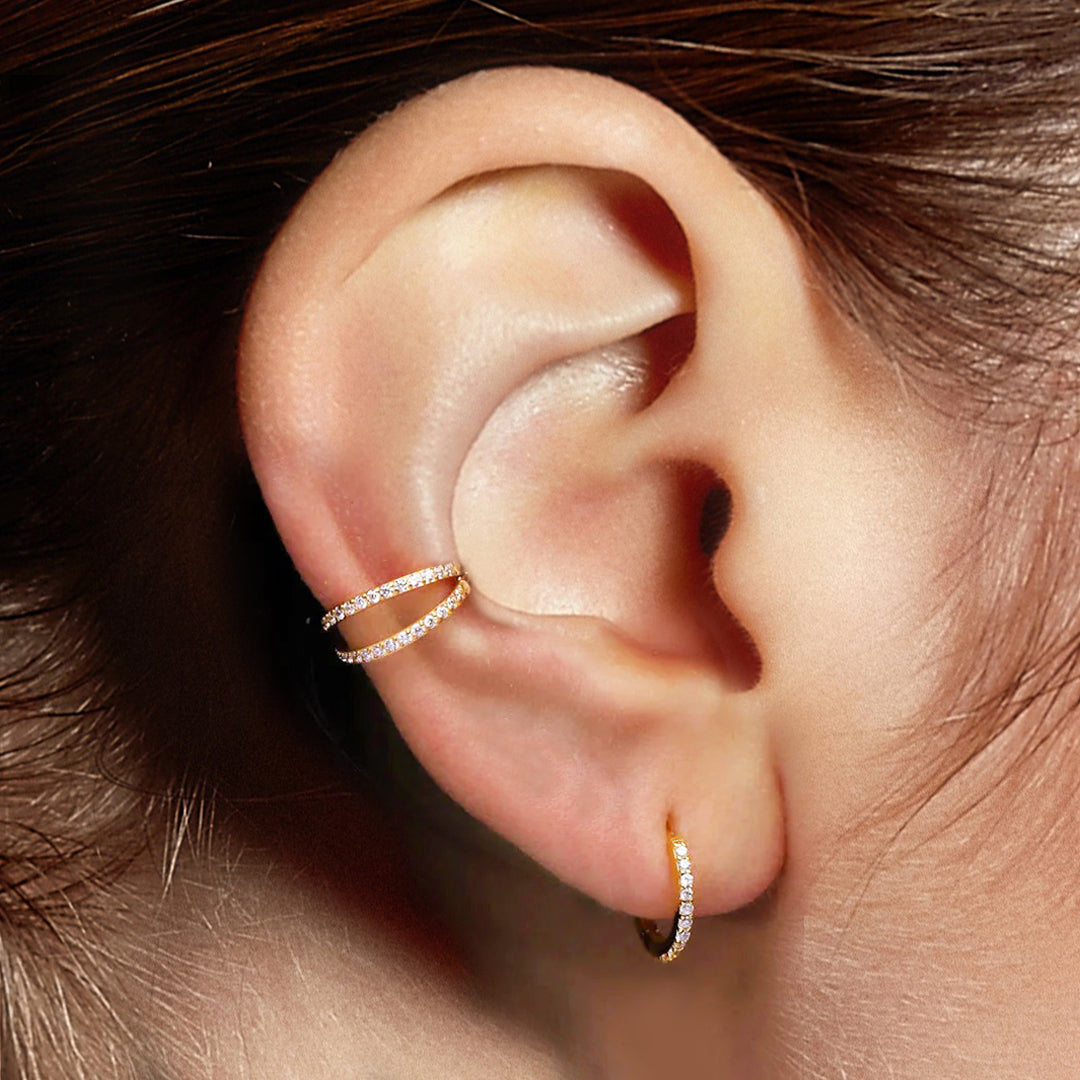
Inner Conch
Located in the centre of the ear.
Usually fitted with a flat-back labret during healing.
Generally experiences less movement, making healing slightly easier.
Outer Conch
Positioned closer to the outer edge of the ear.
Often fitted with a ring after healing.
May experience more irritation because it catches on hair, headphones and clothing.
Although healing times are similar, outer conch piercings often experience more minor setbacks.
Week-by-Week Healing Timeline
Week 1
During the first week you can expect:
- swelling
- warmth
- tenderness
- redness
- slight bleeding
- clear lymph fluid
These are completely normal.
Avoid touching the piercing unless cleaning it.
Weeks 2–4
Pain gradually decreases.
Swelling begins to improve.
Some people notice crust formation around the jewellery.
This is dried lymph fluid—not pus—and is a normal part of healing.
Continue cleaning twice daily using sterile saline solution.
Avoid twisting or rotating the jewellery.
Months 2–3
The piercing starts feeling much better.
Many people mistakenly believe it has healed.
However, the internal cartilage remains fragile.
Changing jewellery during this period is one of the most common reasons for prolonged healing.
Months 3–12: The Long Healing Phase
Between the third and twelfth month, your conch piercing enters what professionals often call the "maturation phase". While the piercing may feel comfortable most days, the cartilage beneath the surface is still rebuilding.
This stage requires patience. Many people experience periods where the piercing feels completely normal for several weeks before becoming slightly sore again after being bumped or slept on. These temporary flare-ups are common and do not necessarily indicate a problem.
During this period:
- Mild tenderness may occasionally return.
- Swelling should continue to decrease.
- The piercing should gradually become less sensitive.
- Clear lymph fluid should become less frequent.
- Redness should continue to fade.
Healing is rarely linear. Small setbacks are normal, provided they settle within a few days.
When Can You Change Your Conch Jewellery?
One of the most common questions is:
Can I change my conch jewellery after three months?
In most cases, no.
Although the piercing may appear healed, the internal cartilage usually requires at least six months, and often closer to nine to twelve months, before routine jewellery changes become comfortable.
Changing jewellery too early can:
- reopen the healing channel
- cause irritation bumps
- increase swelling
- introduce bacteria
- extend healing by several months
If you would like to downsize your initial jewellery because swelling has reduced, it's best to have this carried out by a professional piercer rather than attempting it yourself.
How Long Does Swelling Last?
Swelling varies from person to person.
A typical healing timeline looks like this:
| Time After Piercing | Expected Swelling |
|---|---|
| Week 1 | Moderate to significant swelling |
| Weeks 2–4 | Swelling gradually reduces |
| Months 2–3 | Mild swelling may remain |
| Months 4–6 | Usually minimal |
| Months 6–12 | Fully settled in most people |
If swelling suddenly increases after several months without any obvious cause, review your aftercare routine and jewellery fit before assuming the piercing is infected.
Healthy Healing vs Infection
Many people confuse normal irritation with infection.
The two are very different.
Signs of Healthy Healing
Your piercing is probably healing normally if you notice:
- slight tenderness
- occasional itching
- clear or pale yellow lymph fluid
- small amounts of dried crust
- mild redness immediately after cleaning
- gradual improvement over time
These symptoms are expected during cartilage healing.
Signs That May Suggest Infection
Seek medical advice if you experience:
- thick green or dark yellow discharge
- increasing pain after initial improvement
- spreading redness
- severe swelling
- persistent throbbing
- fever or feeling unwell
- unpleasant odour coming from the piercing
An infection should never be ignored, particularly with cartilage piercings.
Irritation Bump or Infection?
A small bump beside the jewellery is usually caused by irritation rather than infection.
Common causes include:
- sleeping on the piercing
- changing jewellery too early
- low-quality jewellery
- excessive cleaning
- touching the piercing frequently
- snagging it on clothing or hair
Irritation bumps often improve once the underlying cause has been removed.
Sleeping With a New Conch Piercing
Sleeping is one of the biggest reasons healing slows down.
Avoid putting pressure on the piercing whenever possible.
Helpful tips include:
- Sleep on the opposite side.
- Use a travel pillow so your ear sits in the centre opening.
- Keep long hair tied back overnight.
- Change pillowcases regularly.
- Avoid headphones that press against the piercing.
Even one night of prolonged pressure can trigger swelling that lasts several days.
Can You Wear Earbuds?
In-ear earbuds often press directly against an inner conch piercing.
For the first few months, it's better to:
- use the opposite ear only
- choose over-ear headphones if they don't touch the jewellery
- limit prolonged pressure on the piercing
If wearing earbuds causes discomfort, remove them immediately and allow the piercing to settle.
Can You Swim While Your Conch Is Healing?
Swimming is best avoided during the early healing period.
Pools, lakes and hot tubs may contain bacteria that increase the risk of infection.
If possible:
- avoid swimming for the first 6–8 weeks
- rinse the piercing afterwards if accidental exposure occurs
- never submerge an irritated piercing for prolonged periods
The longer you protect the piercing during the early stages, the smoother healing tends to be.
Common Mistakes That Delay Healing
Even healthy piercings can take much longer to heal if these mistakes become habits.
Avoid:
- twisting or rotating the jewellery
- removing jewellery too early
- sleeping directly on the piercing
- cleaning with alcohol or hydrogen peroxide
- over-cleaning several times a day
- touching the jewellery with unwashed hands
- changing jewellery before the piercing has matured
In most cases, less handling leads to faster healing.
The Best Jewellery for a Healing Conch Piercing
The jewellery you wear can have a significant impact on how comfortably your conch piercing heals. While aftercare is essential, choosing high-quality materials helps reduce unnecessary irritation and supports the body's natural healing process.
Professional piercers generally recommend implant-grade titanium for initial conch piercings because it is lightweight, biocompatible and highly resistant to corrosion.
The most commonly recommended materials include:
- Implant-grade titanium (ASTM F-136)
- Solid 14ct or 18ct gold (nickel-free)
- Niobium (less common but suitable for sensitive skin)
Lower-quality metals or plated jewellery may increase irritation, particularly during the early months of healing.
If you're unsure which style is most comfortable during healing, read our Flat Back Earrings Guide.
➡ Internal Link:
Flatback Earrings: The 2026 UK Guide to Comfort and Healing
Titanium vs Surgical Steel
Both titanium and surgical steel are commonly used for body jewellery, but they are not identical.
| Titanium | Surgical Steel |
|---|---|
| Lightweight | Slightly heavier |
| Nickel-free for most wearers | May contain trace nickel |
| Excellent for sensitive skin | Suitable for many people, but not everyone |
| Common choice for fresh piercings | Often used after healing |
For anyone with sensitive skin or a history of jewellery reactions, implant-grade titanium is generally considered the safest option.
Daily Aftercare Routine
Healing a conch piercing doesn't require complicated products or harsh cleaning methods. A simple, consistent routine is usually the most effective.
Morning
- Wash your hands thoroughly.
- Spray sterile saline onto both sides of the piercing.
- Leave the solution to soak for 30–60 seconds.
- Gently pat dry with clean gauze or a disposable paper towel.
Evening
Repeat the same routine before bed.
Avoid moving the jewellery while cleaning. The saline solution should clean around the jewellery naturally without twisting or rotating it.
What Should You Avoid?
Many healing problems are caused by habits that seem harmless.
Try to avoid:
- Rotating the jewellery
- Touching the piercing throughout the day
- Sleeping on the pierced ear
- Using alcohol, tea tree oil or hydrogen peroxide
- Wearing tight hats or helmets that press on the ear
- Changing jewellery before healing is complete
Sometimes the best aftercare is simply leaving the piercing alone.
Frequently Asked Questions
How long does a conch piercing take to heal?
Most conch piercings heal within 6–12 months. While discomfort usually improves within the first few weeks, complete cartilage healing takes considerably longer.
Does an inner conch heal faster than an outer conch?
Healing times are generally similar.
However, outer conch piercings may experience more irritation because they are more likely to catch on hair, clothing and headphones.
Can I sleep on my conch piercing?
It's best to avoid sleeping directly on the piercing until it has fully healed.
Using a travel pillow or sleeping on the opposite side can help reduce pressure and minimise irritation.
Is swelling normal after two months?
Yes.
Mild swelling or tenderness can still occur several months after piercing, particularly after accidental knocks or prolonged pressure while sleeping.
Can I change my conch jewellery after three months?
In most cases, no.
Although the piercing may look healed externally, the internal cartilage usually requires six months or longer before jewellery changes are recommended.
Why does my conch piercing still hurt after four months?
Occasional tenderness is common during cartilage healing.
If the pain is mild and gradually improving, it is usually part of the normal healing process.
If the pain becomes progressively worse or is accompanied by severe swelling, discharge or fever, seek medical advice.
Is crust around the jewellery normal?
Yes.
Small amounts of dried lymph fluid are completely normal during healing.
Avoid picking at the crusts. Instead, allow them to soften naturally during saline cleaning.
Can I wear headphones?
Over-ear headphones are generally preferable to earbuds if they do not place pressure on the piercing.
If any type of headphone causes discomfort, discontinue use until the piercing has settled further.
Related Guides
If you're researching cartilage piercings, these expert guides may also be helpful:
➡ How Long Does It Take Ear Piercings to Heal?
➡ How Long Do Helix Piercings Take to Heal?
➡ How Long Does a Tragus Piercing Take to Heal?
➡ Types of Ear Piercings: The Ultimate UK Placement Guide
Shop Implant-Grade Titanium Conch Jewellery
Once your piercing has fully healed, choosing high-quality jewellery helps maintain comfort and reduces the risk of irritation.
Our collection of implant-grade titanium conch jewellery is designed for everyday wear, combining durability, comfort and timeless style.
➡ Product Link: Titanium Conch Earrings Collection
Final Thoughts
A conch piercing is one of the most distinctive cartilage piercings, but it also requires patience. While many people feel comfortable within a few months, complete healing often takes between six and twelve months.
Following a simple aftercare routine, avoiding unnecessary pressure and choosing high-quality implant-grade titanium jewellery can help support a smooth recovery.
If you're comparing healing times across different cartilage piercings, explore our Complete Ear Piercing Healing Guide, where you'll find detailed advice for helix, tragus, conch and other popular ear piercings.
➡ Final Internal Link: How Long Does It Take Ear Piercings to Heal?