
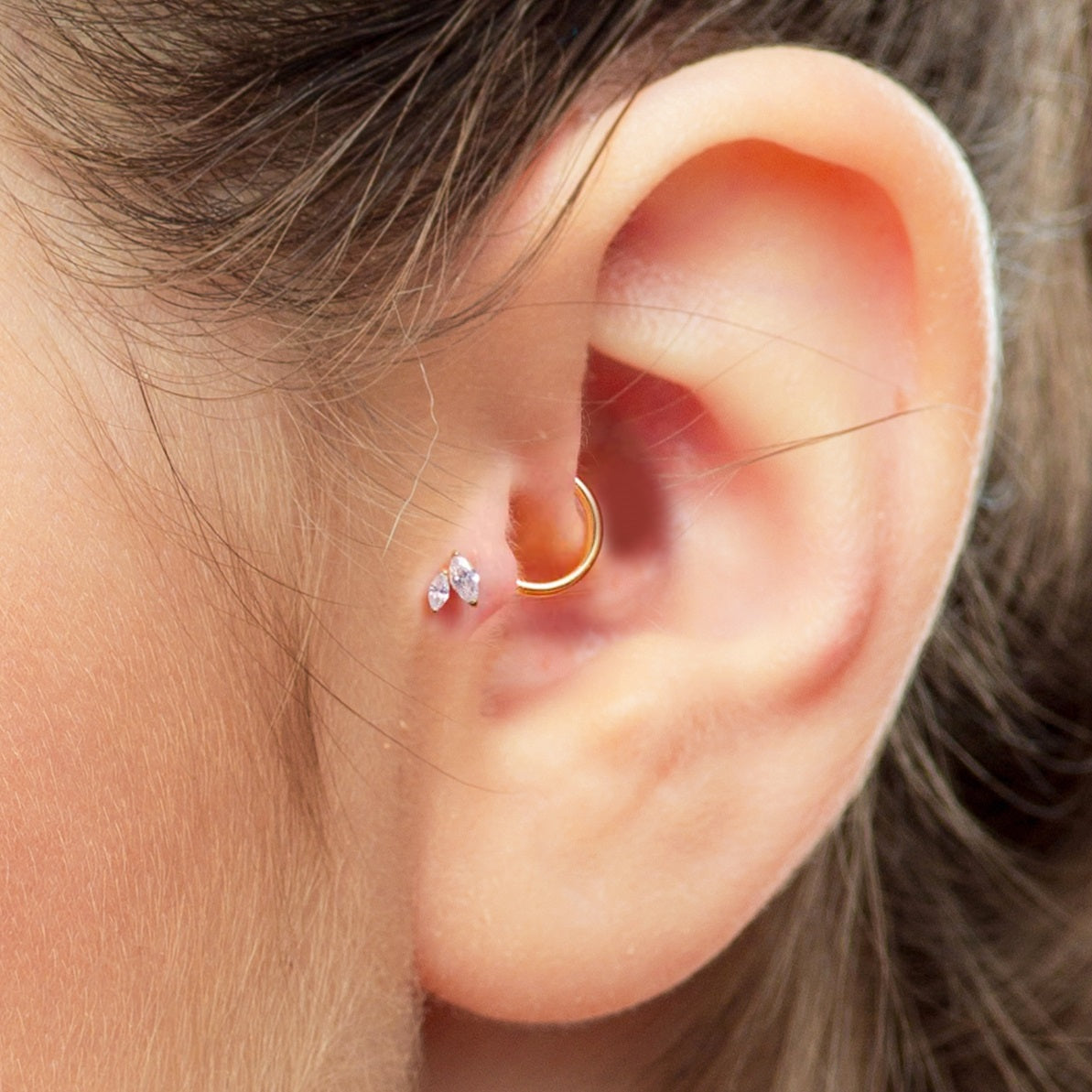
Daith Piercing: Anatomy, Healing, and the Migraine Connection – An Expert UK Guide
The Daith piercing has captured global attention, not just for its aesthetic appeal within the crus helicis (the innermost fold of cartilage), but for its long-standing anecdotal association with migraine relief. As a technically demanding piercing, it requires a precise understanding of ear anatomy and a commitment to a lengthy healing journey.
At Carl Oliver, we provide the expertise needed to ensure your Daith piercing is a lifelong success rather than a temporary trend.
What is a Daith Piercing? The Anatomy
A Daith piercing is located in the cartilage fold just above the ear canal opening.
-
Suitability: Not all ears possess a prominent enough fold to support a Daith; a professional assessment is vital.
-
Origin: The term originates from the Hebrew word for "knowledge," reflecting the precision required for its placement.
Daith Piercing Healing Timeline: 2026 Standards
Due to the thickness of the cartilage and limited blood flow, the Daith piercing demands more patience than standard lobe or helix piercings.
| Healing Phase | Duration | What to Expect | Expert Tip |
| Initial Phase | Weeks 1 - 4 | Redness, swelling, and mild tenderness. | Use sterile saline only; avoid touching. |
| Maturation | Months 2 - 6 | The 'fistula' begins to toughen; "crusties" are common. | Do not change jewellery during this stage. |
| Full Recovery | Months 9 - 12+ | The channel is fully mature and structurally sound. | Best time to switch to a decorative clicker. |
The Migraine Connection: Fact vs. Anecdote
Many seek a Daith piercing specifically for its potential therapeutic effects on chronic headaches.
-
The Theory: It is believed to stimulate the vagus nerve, acting similarly to an acupuncture point.
-
The Reality: While many individuals report significant relief, scientific proof remains limited and often attributed to the placebo effect.
-
Our Stance: At Carl Oliver, we recommend getting a Daith for its beauty first, viewing any migraine relief as a welcome bonus.
Expert Commentary: Avoiding the "Piercing Bump"
"The Daith is tucked away, which often leads to a 'neglect' trap. Because you cannot easily see the exit holes, bacteria can linger. My professional advice is to use a 'no-touch' policy. Avoid in-ear headphones for the first 4 months, as they introduce bacteria and apply pressure to the healing tissue, which is the leading cause of hypertrophic scarring (piercing bumps)."
Frequently Asked Questions (FAQ)
How painful is a Daith piercing?
While the cartilage is thick, the discomfort is usually brief. Most clients describe it as a sharp pressure followed by a dull throb.
What jewellery is best for a new Daith?
Captive bead rings (CBRs) or curved barbells are standard for initial piercings to allow for swelling. We recommend implant-grade titanium to prevent allergic reactions.
Can I wear earbuds with a Daith piercing?
It is strongly advised to avoid earbuds (like AirPods) during the first few months of healing, as they can irritate the site and trap moisture.
New: Can a Daith piercing really help with migraines? Read our Daith Piercing Collection here.
,%20but%20for%20its%20long-standing%20anecdotal%20association%20with%20m...)